Can Your Face Reveal Your Birth Star (Nakshatra)?
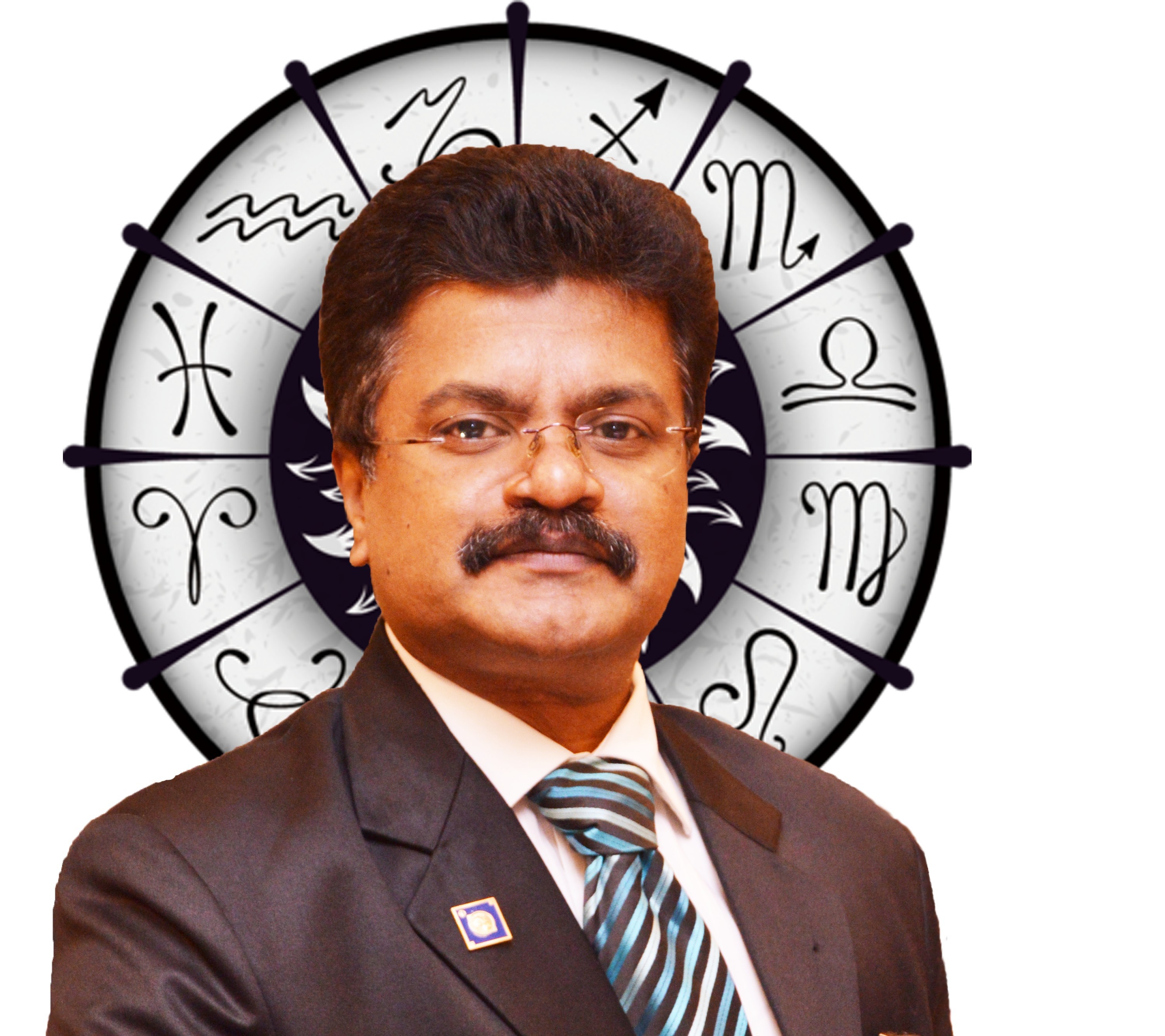
An Interview with Dr. E. K. Dhilip Kumar on Facial Recognition, Nakshatras and Vedic Astrology
Most of you may have come here after watching the video. In case you have not yet watched the complete video please click on the YouTube link after reading this article.
Introduction: A Surprising Encounter
Guruji EKDK : Hello and welcome back to another video on my channel.
Dheepa Ramanujam: Hello and welcome back to another video on my channel. First of all, thank you very much for immediately accepting my invitation for this interview. I don't know whether you remember our first meeting at a movie event. You came directly to me and asked, "Are you born in Punarvasu Nakshatra?"
I was completely shocked!
You knew absolutely nothing about me. Someone had simply walked up to me and correctly identified my birth star. Naturally, I became very curious. Who is this person? How could he know my Nakshatra without knowing my birth details? Later, when we began talking, I discovered that you had done this with many other people. You had identified their Nakshatras by observing their faces. I was surprised, excited and eager to learn more. I thought your viewers would also find this fascinating. That is why I wanted to have this conversation.
Guruji EKDK : Thank you. I believe this discussion will be beneficial to our viewers. I started doing this casually many years ago. When people see me correctly identify someone's Nakshatra, they are amazed. They say, "Wow! How did you do that?" But do you know something? When I first discovered that I could do this, I was the one who said, "Wow!" I was more surprised than anybody else.
Is It Intuition, Magic or Pattern Recognition?
Deepa Ramanujam: How exactly do you identify someone's Nakshatra? Is it intuition, or is there a method behind it?
Guruji EKDK : It is essentially pattern recognition. In fact, I look at Astrology itself as a system involving pattern recognition. Thousands of years ago, our ancient observers studied the positions of planets in the sky and compared them with events happening on Earth. They began recognising recurring relationships. Of course, Astrology is extremely complicated because there are countless permutations and combinations of planetary positions. For example, someone may say that Mars in the seventh house creates difficulties in married life. But that statement alone is insufficient. We must examine other planetary influences, aspects and combinations. Every horoscope has to be studied as a whole. Similarly, my ability to recognise Nakshatras from people's appearances developed through repeated observation.
I have seen thousands of horoscopes and met thousands of people. Over the years, I began associating certain appearances with particular Nakshatras.
Eventually, these patterns became familiar to me.
The Remarkable Experience with Actress Urvashi
Dheepa Ramanujam : Can you share an early experience that convinced you there might be something to this?
Guruji EKDK : Certainly.
Many years ago, I was watching a movie in a theatre with my wife. Actress Urvashi appeared on the screen.
While watching her, I told my wife, "I think Urvashi must be born in Mrigashira Nakshatra."
I had never examined her horoscope.
It was simply an impression that came to me while looking at her.
Many years later, I came across her horoscope in an Express Star Teller magazine published by the Indian Express group.
I immediately took the magazine to my wife and said, "Look! Do you remember what I told you while we were watching that movie?"
According to the horoscope published in the magazine, my guess was correct.
Naturally, I was delighted.
Interestingly, many years later, Urvashi herself stayed for approximately six months in an apartment opposite mine.
I had the opportunity to meet her and tell her this story.
She was curious about how I had identified her Nakshatra.
These are the experiences that encouraged me to continue observing facial patterns.
Is This a Special Talent That Every Astrologer Possesses?
Dheepa Ramanujam : Do all Astrologers have this ability?
Guruji EKDK : Not necessarily.
Every Astrologer develops different skills.
Some may be exceptionally good at predicting marriage, others at analysing careers, and still others at interpreting particular planetary combinations.
I developed an interest in recognising Nakshatras through appearances.
It is not something I learnt from a classical Astrology textbook.
I have not come across a detailed traditional description that enables an Astrologer to identify every Nakshatra simply by examining the face.
My approach developed through observation and memory.
Suppose I have consulted approximately 23,000 clients. At one stage, I could remember the birth Nakshatras of perhaps 10,000 people.
When I see a familiar client, I may immediately remember the person's Nakshatra.
That is memory.
But when I meet a completely new person whose appearance reminds me of several people born under the same Nakshatra, that is pattern recognition.
There is an important difference.
How a 1992 Consultation Started It All
Dheepa Ramanujam : Do you remember the first incident that made you seriously consider this possibility?
Guruji EKDK : Yes. It happened in 1992, during the early days of my professional Astrology practice.
I was conducting consultations in the Pondy Bazaar area of Chennai.
One morning, a gentleman came to consult me. I examined his horoscope, so naturally I knew his Nakshatra.
That evening, another gentleman entered my office.
When I looked at him, I thought he was the same person who had visited me that morning.
There was only one difference.
The second gentleman appeared much slimmer, almost as though the first person's photograph had been reduced in size.
I was puzzled.
After he sat down, I asked, "Didn't you come here this morning?"
He replied, "No, sir. I did not."
I checked my records.
To my astonishment, both gentlemen were born under the same Nakshatra!
They were not relatives. They had no known connection with each other.
Yet their faces were remarkably similar.
That incident created the initial spark.
I began wondering whether there could be some relationship between facial appearance and birth Nakshatra.
From that day onward, I started paying closer attention.
What About Identical Twins?
Dheepa Ramanujam : We know that identical twins often have almost identical faces. They are also generally born under the same Nakshatra. Does that support your observation?
Guruji EKDK : It is an interesting example.
Identical twins usually look very similar and, because they are generally born within minutes of each other, they usually share the same Nakshatra.
But we must be careful about drawing conclusions.
Two people who look alike do not necessarily have the same Nakshatra.
Even brothers and sisters can resemble each other closely while having completely different birth stars.
Similarly, we cannot say that everybody born under Punarvasu, Pushya or Ashwini must have the same facial appearance.
That is not what I am suggesting.
What I am saying is something more limited.
When I observe a particular combination of facial features and mannerisms, it sometimes reminds me of a Nakshatra that I have encountered repeatedly.
That is when I make a guess.
The relationship is not a simple rule that can be applied to everybody.
## A Bharani Nakshatra Surprise During a Zoom Consultation
Deepa Ramanujam: Can you share a recent example?
Guruji EKDK : Certainly.
Most of my consultations these days are conducted through Zoom.
A few months ago, a lady who appeared to be in her sixties joined a consultation.
She had come regarding the horoscope of a family member, not her own.
While discussing the horoscope, I happened to observe her face.
Suddenly, a familiar pattern came to my mind.
I asked her, "Are you born in Bharani Nakshatra?"
She was astonished.
"How do you know my Nakshatra?" she asked.
I explained that Bharani occupies a particular section of the zodiac and that identifying someone's Nakshatra means identifying the region of the sky occupied by the Moon at the time of birth.
She was amazed that I could make such an observation without examining her horoscope.
Later, when she returned for another consultation, she still remembered the incident.
She reminded me that I had correctly identified her Bharani Nakshatra simply by looking at her.
These experiences are enjoyable because the excitement is mutual.
Why Identifying a Nakshatra Is More Complicated Than People Think
Deepa Ramanujam: Some people may assume that identifying a Nakshatra is something an Astrologer should be able to do easily.
Guruji EKDK : Yes, I have encountered that attitude.
Once, after I correctly identified a gentleman's Nakshatra, he casually remarked, "You are an Astrologer. Isn't this your job?"
I asked his age.
He was approximately 63 or 64.
Then I explained what my statement actually meant.
The Moon takes approximately 27.3 days to complete one sidereal revolution around Earth.
Imagine mentally reversing the Moon's movement through the zodiac for more than sixty years.
I was effectively making a statement about the position of the Moon at the precise time he was born.
For example, Pushya Nakshatra occupies the portion of Cancer extending from 3°20′ to 16°40′.
If I identify someone as being born under Pushya, I am suggesting that the Moon occupied that particular region of the zodiac at the person's birth.
When I explained it this way, the gentleman began to appreciate the complexity of what I was attempting.
It was no longer merely a casual guess about someone's personality.
Can You Identify Everyone's Nakshatra?
Deepa Ramanujam: Suppose you correctly identify one person's Nakshatra. Naturally, the person standing next to them will ask, "What is my Nakshatra?"
Can you identify that person's star too?
Guruji EKDK : No. That is one of the biggest misunderstandings.
I cannot identify everybody's Nakshatra.
Sometimes I look at a person and immediately recognise a familiar pattern.
At other times, I see absolutely nothing that reminds me of any particular Nakshatra.
When that happens, I do not make a guess.
People sometimes expect me to identify everybody in a gathering.
That is not how it works.
I need to recognise something familiar.
If the pattern does not appear to me, I remain silent.
I am not interested in making repeated guesses until I happen to get one right.
Which Nakshatras Are Easier to Recognise?
Deepa Ramanujam: Are certain Nakshatras easier for you to identify than others?
Guruji EKDK : Yes, definitely.
For some reason, I find certain Nakshatras much easier to recognise.
For example, Uttara Bhadrapada is one that I can often identify quite easily.
Vishakha is comparatively difficult for me.
Some appearances remind me of Ashwini, while certain people born under Uttara Ashadha also seem to exhibit recognisable patterns.
There are occasions when I cannot identify the Nakshatra but can identify the Rāśi.
I do not know why some Nakshatras appear more recognisable to me than others.
It may have something to do with the number of people I have encountered from each Nakshatra and the strength of the patterns stored in my memory.
Is It Really the Face, or Something More?
Dheepa Ramanujam : When you look at someone, what exactly do you observe? Is it the eyes, forehead, facial structure or the person's overall appearance?
Guruji EKDK : That is a very important question.
It is not merely the shape of the face.
In fact, facial structure is only one of several clues.
I pay attention to how a person moves the head, the expressions in the eyes, the eyebrows, facial movements, mannerisms and the overall way the person presents themselves.
Sometimes even the voice gives me an additional clue.
The eyes are particularly useful to me.
The shape of the eyes, the expression and the way a person looks at others may remind me of someone whose Nakshatra I already know.
The voice can also contribute to the impression.
For example, consider the distinctive voice of comedian Vadivelu.
It reminds me of a voice pattern that I associate with Mrigashira Nakshatra.
I have noticed something similar in the speech of certain other public personalities.
But that does not mean everybody born under Mrigashira must have the same voice.
We should never generalise in that manner.
It is the overall combination that matters.
Can the Rāśi Be More Recognisable Than the Nakshatra?
Dheepa Ramanujam: You mentioned that sometimes you identify the Rāśi rather than the Nakshatra. Can you explain?
Guruji EKDK : Yes.
A Rāśi occupies 30 degrees of the zodiac, while a Nakshatra occupies 13 degrees and 20 minutes.
Sometimes the overall appearance reminds me strongly of a particular Rāśi, but I cannot confidently identify the Nakshatra.
Recently, I was playing snooker at the Madras Race Club.
A gentleman whom I had not met before was sitting nearby.
At one point, I turned towards him and asked, "Are you Simha Rāśi?"
He was so surprised that he put down the glass he was holding.
He wanted to know how I had identified his Moon sign.
I had not examined his horoscope.
His appearance simply reminded me of the pattern I associate with Simha Rāśi.
On other occasions, the opposite happens.
I may recognise the Nakshatra but not know which Rāśi portion it occupies in that person's horoscope.
For example, Punarvasu extends across Gemini and Cancer.
A person born under Punarvasu may have the Moon in either sign.
I may recognise Punarvasu without being able to distinguish the Rāśi.
That is exactly what happened when I first met you.
What Happens When Your Guess Is Wrong?
Dheepa Ramanujam: You have mentioned a very high success rate. What happens when your guess is incorrect?
Guruji EKDK : Based on my personal experience, when I feel confident enough to make a guess, I estimate that I am correct about 95% of the time.
This is my personal estimate, not a statistically documented result.
What interests me is that many of my incorrect guesses seem to involve an adjacent Nakshatra.
For example, I recently met a new member at a Rotary Club gathering.
While speaking with him, I thought of Mrigashira and asked whether that was his Nakshatra.
He replied that he was born under Ardra.
Ardra immediately follows Mrigashira.
This kind of near miss has happened on several occasions.
It makes me curious about whether neighbouring Nakshatras might sometimes share recognisable characteristics.
But I cannot claim that this has been scientifically established.
Could the Recorded Birth Time Be Wrong?
Dheepa Ramanujam: Is it possible that some of your apparently incorrect guesses are actually correct, but the person's recorded birth time is inaccurate?
Guruji EKDK : That possibility certainly exists in some cases.
When the Moon is close to the boundary between two Nakshatras, a difference in birth time or calculation method can affect the result.
There are also differences between traditional Panchanga calculation systems.
Some people have old handwritten horoscopes prepared many decades ago. They naturally place great faith in these documents.
But errors are possible.
I remember an incident involving a gentleman whose face strongly reminded me of Pushya Nakshatra.
His family told me that his Nakshatra was Ashlesha.
I did not argue.
Later, during a consultation, I entered his birth details into a computer and calculated the horoscope.
The result was Pushya, matching my original impression.
That was a memorable experience.
However, when resolving such discrepancies, we should rely on accurate astronomical calculations and reliable birth details rather than facial recognition.
How Does Your Scientific Background Influence Your Thinking?
Deepa Ramanujam: You frequently describe your method as pattern recognition. Does your scientific education influence the way you approach Astrology?
Guruji EKDK : Very much.
I have a postgraduate degree in Science from Presidency College, Chennai.
I also have a background in computer programming.
When I first became interested in Astrology, I was actually sceptical.
I wondered whether Astrology was genuine or whether people were being misled.
I had studied in an educational environment where traditional Indian knowledge was often viewed with suspicion.
For many years, I questioned how planets located far away in the sky could have any relationship with human life.
At the same time, I was fascinated by the extensive body of traditional Astrological literature.
I read books, studied classical teachings and remained interested in the work of prominent Astrologers such as Dr. B. V. Raman.
I continued studying because I wanted to understand whether the patterns described in Astrology had practical value.
Even today, I find pattern recognition to be one of the most interesting aspects of my work.
Can Other People Learn This Method?
Deepa Ramanujam: Do you believe other people can develop this ability?
Guruji EKDK : I believe they can at least attempt to develop their observational skills.
Suppose you begin today.
Whenever you meet someone whose birth Nakshatra is known to you, observe their facial expressions, mannerisms and overall appearance.
With their permission, you could maintain a collection of photographs or videos organised according to Nakshatra.
Over time, you may begin noticing similarities.
The important thing is to observe repeatedly rather than jump to conclusions after seeing one or two people.
You must also remember the occasions when your guesses are wrong.
Only then can you determine whether a pattern is genuinely useful.
I developed my impressions over many years through repeated exposure to clients and their horoscopes.
Does This Work with People from Other Countries?
Deepa Ramanujam: Most of the people you have interacted with are Indians, particularly South Indians. Can you identify the Nakshatras of foreigners?
Guruji EKDK : No. I have not developed that ability.
My observations have largely been among Indian people, especially South Indians.
I have sometimes attempted this with North Indians, but I find it more difficult.
One possible reason is that most of the people whose horoscopes I have studied belong to the South Indian population.
I have also consulted many people from the Tamil film industry.
The faces and birth details of several well-known personalities remain strongly associated in my memory.
Naturally, my experience influences the patterns I recognise.
I cannot assume that a pattern familiar to me among South Indians will apply equally to people from entirely different backgrounds.
A Memorable Incident at a Public Gathering
Dheepa Ramanujam: Have people ever put you under pressure to identify someone's Nakshatra in public?
Guruji EKDK : Yes, and sometimes it becomes quite uncomfortable!
At a large gathering, a gentleman arrived from Kuwait.
A VIP sitting near me began praising my abilities and told the visitor that I would soon look at him and identify his Nakshatra.
Imagine my situation!
I had come to the gathering to relax, not to perform a demonstration.
The expectation had already been created in front of several people.
I was concerned that someone might deliberately give an incorrect answer simply to embarrass me.
So I decided to handle the situation differently.
Before announcing my guess, I sent a message containing the Nakshatra to another person in the gathering.
Then I asked the visitor to reveal his Nakshatra.
When he answered, I asked the person who had received my message to show it.
The Nakshatra matched.
That way, the prediction had been recorded before the answer was revealed.
It was an interesting experience, but I do not enjoy being placed under pressure to perform these demonstrations.
The Chess Tournament and Revati Nakshatra
Dheepa Ramanujam: You are also interested in chess. Have you ever identified someone's Nakshatra in an unusual situation?
Guruji EKDK : Yes. One of my most entertaining experiences happened during a Rotary chess tournament.
I was participating in the tournament and had won my earlier games.
In the fourth round, I was playing against another Rotarian.
That day, I was playing exceptionally well.
I kept capturing his pieces, and he became increasingly frustrated.
Eventually, he resigned.
He was so upset that he walked away from the board.
I went over to console him.
I told him, "Sir, it is only a game. Don't worry. I have played chess seriously since my younger days. You are still a strong player."
Then, almost casually, I asked, "By the way, are you born in Revati Nakshatra?"
His reaction was extraordinary!
He was already upset about losing the chess game. Now he was even more astonished that I had correctly identified his birth star.
He became so excited that he moved around the auditorium expressing his surprise.
In his case, one particular feature had caught my attention.
His eyebrows.
They reminded me strongly of a pattern I associated with Revati Nakshatra.
But please understand that this does not mean everybody with similar eyebrows must be born under Revati.
It was one clue within my accumulated experience.
## Why One Nakshatra Cannot Explain a Person's Entire Life
Deepa Ramanujam: If two people are born under the same Nakshatra, should we expect them to have similar lives?
Guruji EKDK : Absolutely not.
This is one of the biggest mistakes people make when discussing Astrology.
They take one factor from a horoscope and attempt to explain everything through it.
Let me give you an example.
Former Tamil Nadu Chief Minister J. Jayalalithaa was born under Magha Nakshatra.
When I discuss her horoscope during public presentations, people sometimes become excited and say, "Magham-born woman!"
They begin associating her extraordinary political success with Magha Nakshatra.
But consider this.
I knew a domestic worker who was also born under Magha Nakshatra, in the same month.
She earned approximately ₹12,000 a month and struggled to meet her daily expenses.
Both women were born under the same Nakshatra.
Yet their lives were completely different.
Why?
Because the Nakshatra is only one component of a horoscope.
In Jayalalithaa's chart, we must examine the Lagna, planetary lordships, exaltations, Yogas, Dashas and many other factors.
For example, Venus, the lord of the fifth house in her chart, was exalted in the tenth house.
Her rise in the film industry occurred during Venus Mahadasha.
These are significant Astrological factors that must be examined together.
We cannot explain her success merely by saying she was born under Magha Nakshatra.
Similarly, even if I recognise a particular Rāśi or Nakshatra from someone's appearance, that does not mean I can predict the person's entire life from the face.
For that, we need a complete horoscope.
Can Artificial Intelligence Investigate These Patterns?
Deepa Ramanujam: Today we have Artificial Intelligence and advanced facial recognition technology. Could these be used to study your observations?
Guruji EKDK : That is an interesting possibility.
Imagine collecting a large number of photographs along with accurately verified birth details.
We could calculate the Nakshatra for each individual and organise the photographs accordingly.
Then we could use computer systems to analyse facial features and look for recurring patterns.
Perhaps Artificial Intelligence could discover similarities that are difficult for the human eye to notice.
But such a study would need a proper method and sufficient data.
We should not simply enter photographs and assume that the computer will discover an Astrological relationship.
We would need to establish whether the patterns are consistent and whether they can be recognised in people who were not part of the original dataset.
I believe modern technology offers interesting opportunities to investigate traditional Astrological claims.
Pattern Recognition Beyond Facial Appearance
Dheepa Ramanujam: Does pattern recognition have applications in other areas of Astrology?
Guruji EKDK : Certainly.
I encourage people to examine patterns in their own lives.
For example, observe whether certain periods repeatedly bring favourable or unfavourable experiences.
In Vedic Astrology, we study Mahadashas and Antardashas.
Sometimes similar themes appear during different periods ruled by the same planet.
Let me give you a recent example.
During a consultation, I was examining a client's horoscope and noticed an important professional change associated with Rahu Antardasha.
I asked whether he had experienced a major career change during an earlier Rahu period, around 2013 to 2015.
He immediately confirmed that he had obtained an important job in Qatar during that earlier period.
To me, such repeated patterns are worth examining.
This is one reason I encourage students to study past events before making future predictions.
Is Astrology a Science?
Deepa Ramanujam: Throughout our conversation, you have connected Astrology with observation, experience and pattern recognition.
Guruji EKDK : Yes.
My interest is not merely in demonstrating an unusual ability.
I want people to study Astrology seriously.
There is a vast body of traditional knowledge that deserves careful examination.
Our ancient scholars performed sophisticated astronomical calculations long before modern computers existed.
Today, with the help of technology, we have opportunities to investigate many traditional ideas in greater detail.
At the same time, we must distinguish between personal experiences, traditional beliefs and scientifically established conclusions.
My ability to guess certain Nakshatras from appearance is a personal observation. It is not, by itself, scientific proof of Astrology.
A properly designed experiment would help us understand whether the apparent success is greater than chance.
I would welcome such an investigation.
Final Thoughts: An Invitation to Observe
Deepa Ramanujam: This has been a fascinating discussion. When I first met you and you correctly identified my Punarvasu Nakshatra, I thought you might be using intuition or perhaps some traditional method such as Samudrika Lakshana. Now I understand that you describe it as a form of pattern recognition developed through many years of studying horoscopes and observing people.
I had no idea there was so much experience behind what appeared to be a simple question. I am sure our viewers will find this discussion informative and interesting.
Guruji EKDK : Thank you. I would encourage viewers to become more observant. Study the people around you. Notice recurring patterns. Compare your observations carefully. But do not assume that one resemblance establishes a universal rule. In Astrology, as in any serious field of study, we must continue learning. Even after decades of practice, I remain a student. There is still so much to explore.
Dheepa Ramanujam: Thank you so much, Guruji, for your time and for sharing these experiences.
Before we conclude, I have a small question for our viewers.
Can you identify the movie in which you have seen me? Please mention it in the comments section.
Guruji EKDK : Thank you.

Dr E K Dhilip Kumar, M.Sc.,
Founder, Dhilip Institute of Professional Astrology (DIPA)*
Website: www.astrologyekdk.com
An interesting article to know if you are King material -https://astrologyekdk.com/blog/king-yogas-born-to-rule-or-stand-next-to-the-king
Practical Solutions. Not Mere Predictions.
Discussion